

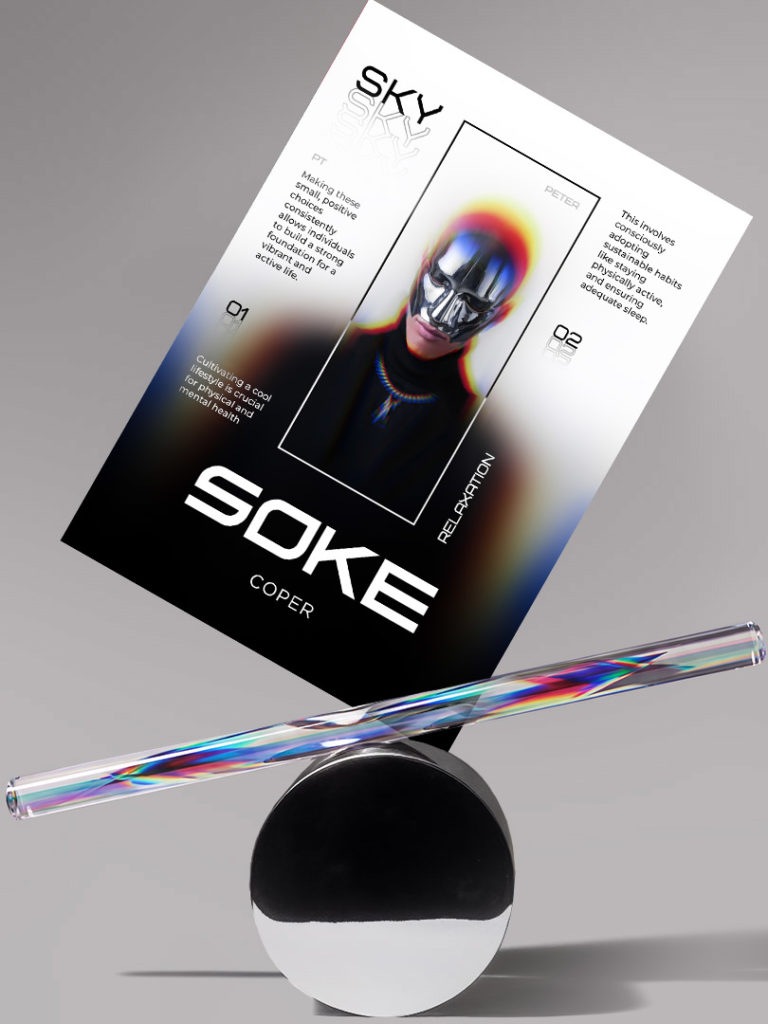







The landscape of modern cinema has undergone a dramatic transformation over the past decade, driven largely by advancements in artificial intelligence and machine learning algorithms that have fundamentally changed how visual effects are created and rendered. Traditional 3D rendering pipelines, which once required enormous computational resources and countless hours of manual labor, are now being augmented by intelligent systems that can predict lighting behavior, optimize geometry, and even generate entire scenes from minimal input data. This shift represents not merely an incremental improvement in rendering technology, but a paradigm shift in how filmmakers and visual effects artists approach the creation of digital imagery. The implications of this transformation extend far beyond the realm of entertainment, touching industries from architectural visualization to scientific simulation, where the ability to generate photorealistic imagery quickly and efficiently has become a competitive necessity rather than a luxury.
The Neural Rendering Revolution
At the heart of this revolution lies the concept of neural rendering, a technique that leverages deep learning networks to approximate physically-based rendering processes with a fraction of the computational cost. Traditional rendering engines simulate the behavior of light as it interacts with surfaces, calculating reflections, refractions, and shadows through complex mathematical models that can take hours or even days to resolve for a single frame. Neural rendering approaches, by contrast, train neural networks on vast datasets of rendered images, enabling them to predict the final appearance of a scene with remarkable accuracy after learning the underlying patterns that govern light transport. Companies like NVIDIA have been at the forefront of this technology with their neural graphics frameworks that can generate realistic facial animations, environmental lighting, and material properties in real-time, opening possibilities for live virtual production that were previously confined to the realm of science fiction.
Denoising and Super-Resolution Breakthroughs
One of the most compelling applications of AI in 3D rendering has been in the domain of denoising and upscaling. Monte Carlo path tracing, the gold standard for photorealistic rendering, produces images that are inherently noisy at low sample counts, requiring thousands of samples per pixel to converge to a clean result. AI denoisers can take a low-sample-count render and reconstruct a clean, artifact-free image in a fraction of the time, effectively multiplying rendering throughput by orders of magnitude. Similarly, AI-based super-resolution techniques can take rendered images at lower resolutions and intelligently upscale them to 4K or 8K while preserving detail that traditional interpolation methods would lose. These technologies have been particularly transformative for real-time applications like video games and virtual reality, where maintaining high frame rates is essential but visual quality cannot be compromised.
Industry Adoption and Creative Impact
The film industry has been among the earliest and most enthusiastic adopters of AI-enhanced rendering workflows. Major studios like Disney, Warner Bros., and Netflix have invested heavily in AI tools that accelerate every stage of the visual effects pipeline, from pre-visualization through final pixel rendering. In practice, this means that artists can iterate more rapidly on creative decisions, exploring multiple lighting setups, camera angles, and material variations without being constrained by render times. The technology has also enabled smaller studios and independent filmmakers to achieve visual effects quality that was previously accessible only to blockbuster productions with massive budgets. This democratization of high-end visual effects has led to a flourishing of creative storytelling, where the primary limitation is no longer technical capability but artistic vision itself.
Hardware and Infrastructure Evolution
The integration of AI rendering technologies has also had a significant impact on the economics of film and content production. Render farms, which were once massive server arrays consuming enormous amounts of electricity and requiring dedicated facilities, are being augmented or replaced by AI-accelerated rendering nodes that achieve comparable results with a fraction of the hardware. Cloud-based AI rendering services have emerged that allow studios to scale their rendering capacity on demand, paying only for the compute they actually use rather than maintaining expensive infrastructure. This has been particularly transformative for smaller production companies and independent filmmakers, who can now access rendering capabilities that would have required millions of dollars in capital investment just a few years ago. The resulting diversity of content creators has enriched the entertainment landscape with voices and perspectives that were previously excluded from high-end visual production.
Sustainability and Efficiency Gains
The technical challenges of implementing AI rendering at scale have driven innovation in hardware design, leading to specialized processors that combine traditional graphics rendering with dedicated AI acceleration. NVIDIA’s RTX architecture, which integrates tensor cores for AI processing alongside CUDA cores for traditional rendering, exemplifies this convergence of rendering technologies. These hybrid processors enable real-time applications to leverage both traditional and AI-enhanced rendering techniques simultaneously, selecting the optimal approach for each element of a scene based on performance requirements and visual quality targets. The development of dedicated AI rendering hardware has accelerated the adoption of neural rendering techniques across industries, making what was once research-grade technology available in consumer-level products.
Future Trajectories and Emerging Capabilities
Environmental and sustainability considerations have also benefited from AI advances in rendering. Traditional rendering farms consume substantial amounts of electricity, much of it wasted on rendering calculations that ultimately do not contribute to the final image quality. AI-optimized rendering can reduce this waste by predicting which pixels require high sample counts and which can be accurately rendered with minimal computation, directing rendering resources only where they are needed. Studios that have adopted AI-enhanced rendering workflows report energy savings of 40 to 60 percent compared to traditional rendering approaches, representing both cost savings and meaningful reductions in environmental impact. As the entertainment industry faces increasing pressure to address its carbon footprint, AI rendering efficiency has become an important tool for sustainable production practices.
Looking toward the future, the integration of AI with 3D rendering promises to deliver capabilities that are genuinely transformative rather than merely incremental. Real-time global illumination, fully dynamic physics-based materials, and procedurally generated environments that respond to narrative context are all becoming practical realities thanks to AI acceleration. Perhaps most exciting is the emergence of generative rendering systems that can create complete 3D scenes from textual descriptions or rough sketches, allowing directors and designers to explore creative possibilities at the speed of thought rather than the speed of computation. As these technologies continue to mature, the boundary between physical reality and digital creation will become increasingly permeable, offering storytellers tools of unprecedented power and flexibility to bring their visions to life on screen.




Insights & Updates
The latest from the studio — project launches, behind-the-scenes looks, and thoughts on design, technology, and creative process.
Ready to get started?
Hey there! Looking to team up with a creative genius (that’s you!) for an exciting project? I’m all ears! Let’s combine our superpowers and make something awesome together!